

Brainspotting therapy benefits: Is it right for you?
June 26, 2025
The hidden grief no one talks about
November 19, 2025
Mental health and anxiety affect millions worldwide, often shaping daily experiences in profound ways. To better understand these impacts, I conducted an anxiety survey with multiple-choice questions, collecting responses from a diverse range of individuals around the world. What follows are six key insights drawn from these anxiety survey results, reflecting real-world experiences and challenges.
Background & Purpose of the Survey
The purpose of this informal anxiety survey was to better understand the broad range of experiences people have with anxiety, including the common challenges they face, what holds them back from seeking help, and which aspects of anxiety impact them the most. By gathering these insights through the anxiety survey results, the aim is to inform more effective and relevant mental health support.
Methodology
The anxiety survey featured multiple-choice questions distributed via social media and professional networks. 170 respondents completed the survey, providing a diverse data set for analysis of anxiety survey results.
Key Insight One: The biggest challenge of living with anxiety
Results:
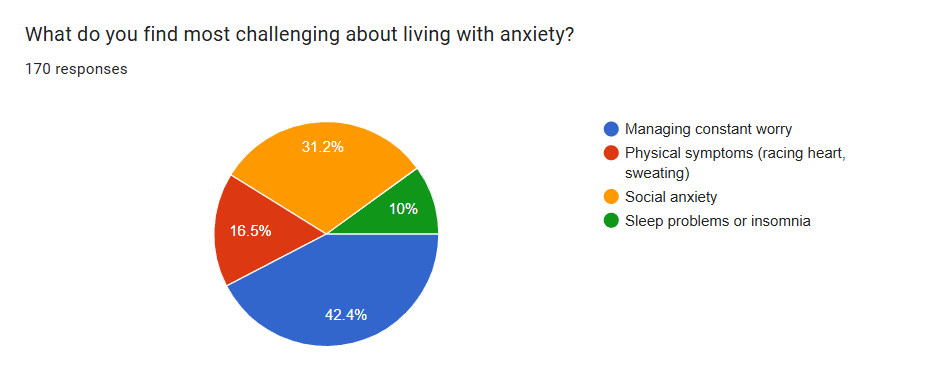
- 42% of respondents say managing constant worry is the most difficult aspect for them.
- 31.2% reported physical anxiety symptoms.
- 16.5% experience social anxiety.
- 10% say they have sleep problems or insomnia
Summary:
The anxiety survey results highlight that managing constant worry is the top daily challenge for 42% of respondents. Physical symptoms affect 31.2%, social anxiety impacts 16.5%, and 10% experience sleep problems or insomnia. These findings reveal the varied ways anxiety influences everyday life and underscore the need for personalized coping strategies and mental health support.
Key Insight Two: Most effective anxiety coping strategies found helpful by participants
Results:
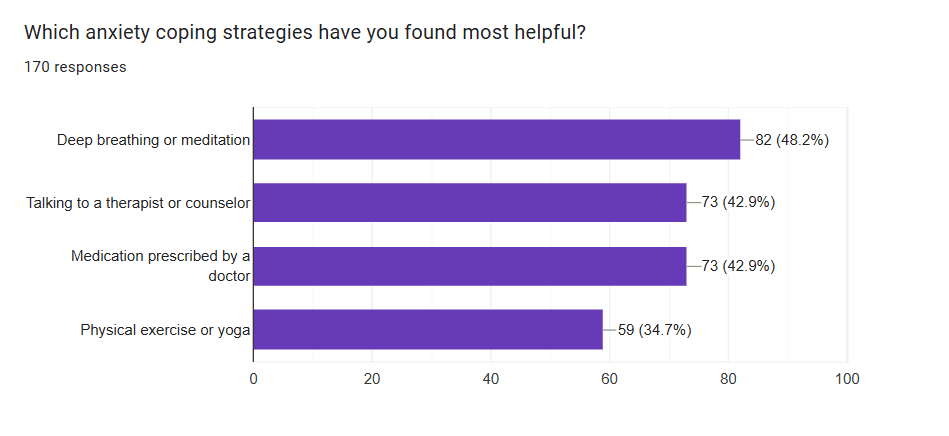
- 48.2% of respondents utilize deep breathing or meditation
- 42.9% reported talking to a therapist or counselor as the most helpful strategy
- 42.9% use medication prescribed by a doctor
- 34.7% engage in physical exercise or yoga
Summary:
The anxiety survey results show that nearly half of respondents (48.2%) use deep breathing or meditation as key strategies to manage anxiety. Equally, 42.9% find talking to a therapist or counselor and using prescribed medication helpful. Physical exercise or yoga is practiced by 34.7% to cope with anxiety symptoms. Since respondents could select multiple strategies, these percentages represent the share of users employing each method, not exclusive choices. These insights highlight the variety of effective coping mechanisms people rely on and emphasize the importance of accessible, personalized mental health support.
Key Insight Three: How anxiety most significantly Impacts daily life
Results:
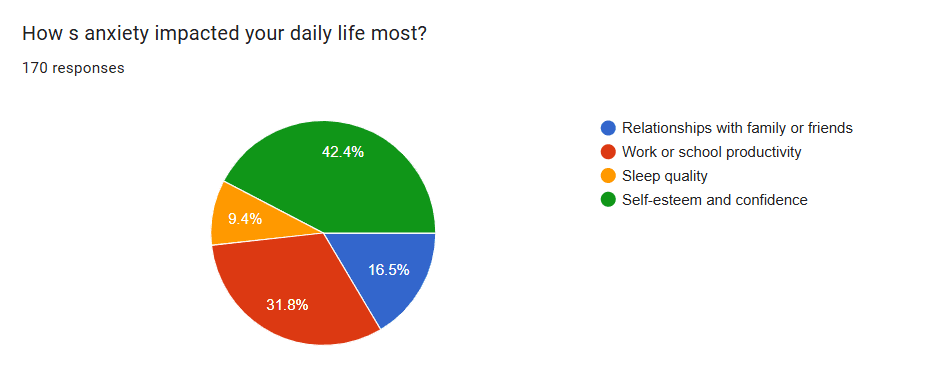
- 42.4% say anxiety mostly affects their self-esteem and confidence
- 31.8% report work or school productivity issues
- 16.5% indicate anxiety affects their relationship with family or friends
- 9.4% experience sleep issues
Summary:
The anxiety survey results show that anxiety significantly affects many areas of daily life. For 42.4% of respondents, anxiety mostly impacts their self-esteem and confidence. Work or school productivity issues are reported by 31.8%, while 16.5% say anxiety affects their relationships with family and friends. Sleep problems are experienced by 9.4%. These findings highlight the widespread and varied ways anxiety can interfere with personal and professional well-being, emphasizing the need for effective support and coping strategies tailored to these challenges.
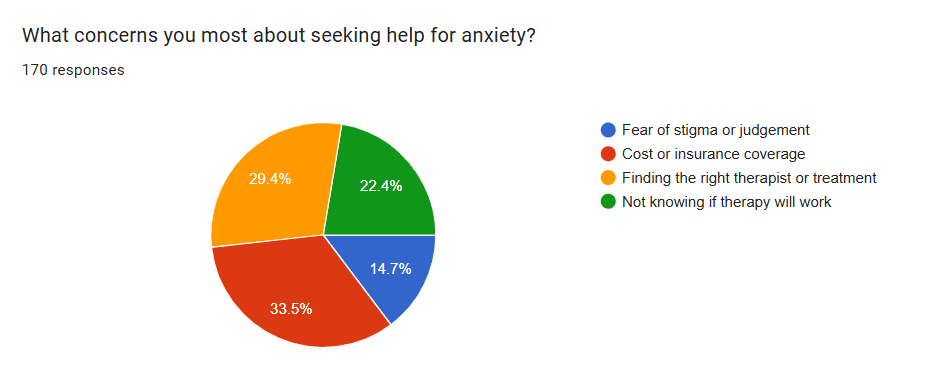
Key Insight Four: Common concerns about seeking help for anxiety
Results:
- 33.5% indicated cost or insurance coverage as their main barrier to seeking help.
- 29.4% reported difficulty finding the right therapist or treatment for them.
- 22.4% were unsure whether therapy would work for them.
- 14.7% cited fear of stigma or judgment as a barrier to reaching out.
Summary:
The survey results reveal significant barriers that prevent many individuals from seeking help for anxiety. Cost and insurance coverage are the main obstacles for 33.5% of respondents, making affordability a critical issue. Nearly 30% struggle with finding the right therapist or treatment, while 22.4% remain uncertain whether therapy will work for them. Additionally, 14.7% admit that fear of stigma or judgment holds them back. These insights highlight the urgent need to improve accessibility, reduce stigma, and provide clearer guidance to support those facing anxiety.
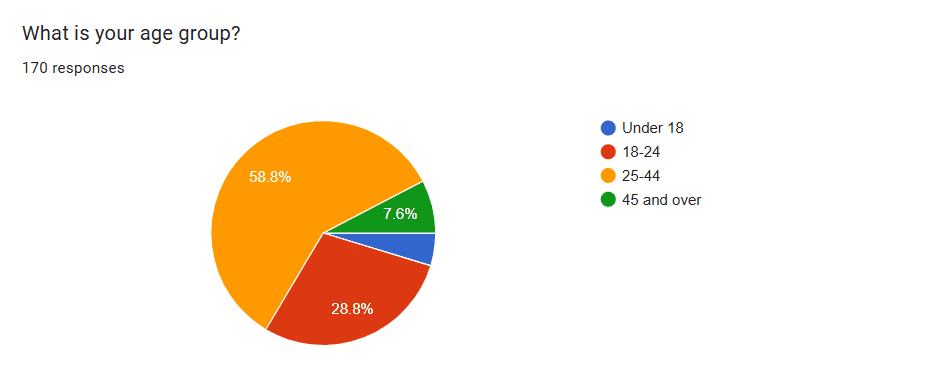
Key Insight Five: Anxiety prevalence across different age groups
Results:
- 58.8% of respondents were ages 25-44.
- 28.8% were 18-24 years old.
- 7.6% were age 45 and over.
- 4.8% were under 18 years of age.
Summary:
The survey respondents were primarily adults aged 25 to 44, making up 58.8% of participants. Younger adults aged 18 to 24 accounted for 28.8%, while 7.6% were aged 45 and over. Those under 18 represented 4.8% of respondents. This age distribution reflects the broad engagement of young and middle-aged adults in conversations around anxiety and mental health.
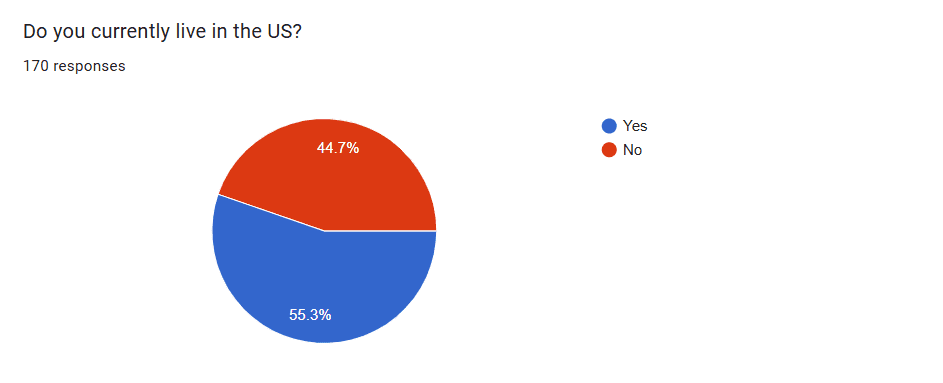
Key Insight Six: Anxiety prevalence and experience among U.S. residents
Results:
- 55.3% of respondents live in the US
- 44.7% live outside the US
Summary:
The survey results show that a majority of respondents (55.3%) live in the US, while 44.7% are from outside the US. This mix of domestic and international participants provides valuable insight into how anxiety affects people across different regions, helping to inform mental health discussions on a broader scale.
Enjoyed these insights?
If you found this post helpful, please consider sharing it or linking to it in your content to help more people learn about mental health and anxiety. If you’re looking for personalized support and live in NY or Florida, I offer free 15-minute consultations. No pressure, just a conversation to see if working together might help.
To learn more about how I can help, visit my Anxiety Counseling Services page.
