

People-Pleasing and anxiety: Why you always say yes
October 16, 2026
Giving yourself permission to grieve
November 20, 2026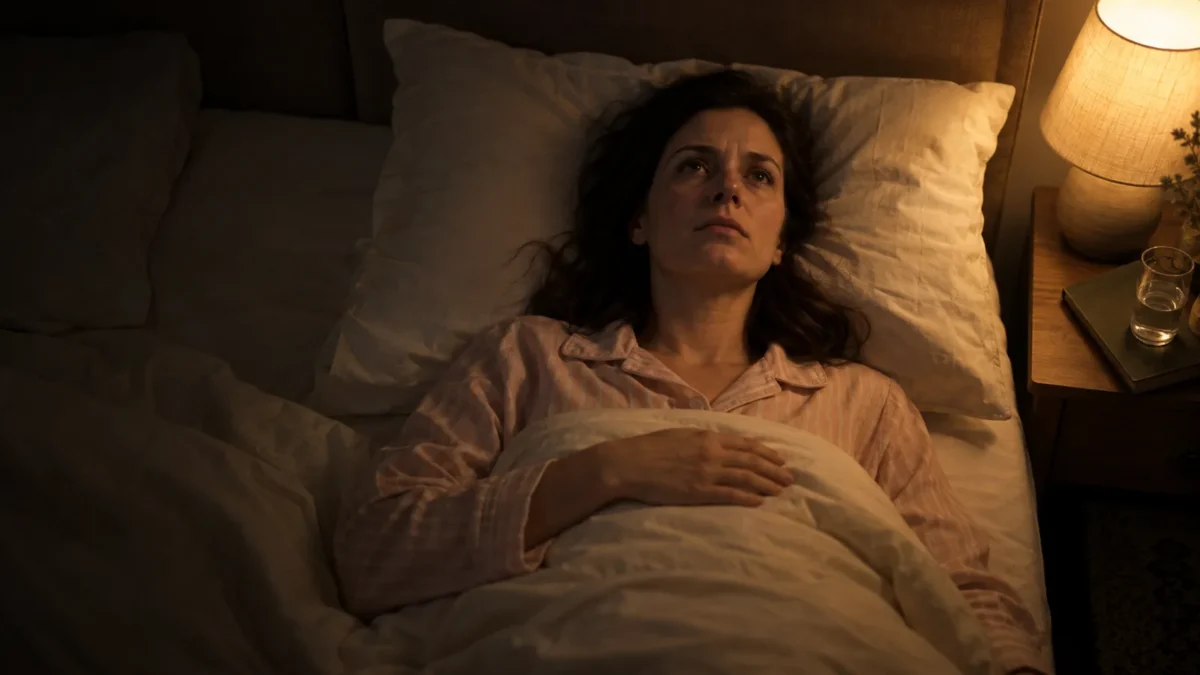
You made it through the day. You worked, answered the messages, kept things moving. Then you get into bed, turn off the light, and suddenly your mind is wide awake. If nighttime anxiety is a familiar pattern for you, you’re not imagining it, and you’re definitely not the only one.
If you’re awake right now
You don’t have to fix your anxiety to get some relief tonight. Try one of these and see what helps.
Check in with your body first. Notice where you feel the anxiety (a tight chest, a racing heart) and name what it’s about in a word or two. Then take a few calming breaths: breathe in Even a short pause like this can interrupt the overthinking loop.
Name three things you notice right now. The weight of the blanket, the cool side of the pillow, the sound of your own breath. This gently pulls you out of your thoughts and back into the present.
If you can’t sleep, don’t fight it in bed. If you’ve been awake for 20 minutes or so, get up, keep the lights low, and do something quiet and boring until you feel sleepy again.
Why anxiety gets worse at night
There’s nothing left to distract you, and you’ve been holding it together all day.
All day, your mind has something to hold on to: tasks, people, noise, your phone. At night, all of that falls away. For a lot of people, especially those with high-functioning anxiety, the day is spent looking calm and capable. Night is when you finally clock out, and everything you held back catches up with you.
If you tend to people-please, it can look like replaying every conversation: Did I sound rude? Should I have said yes? Are they upset with me? I’ve written about how people-pleasing and anxiety feed each other, and this nighttime replay is one of the clearest places it shows up.
You’re tired, and that makes everything feel bigger
When you’re exhausted, it’s harder to keep things in perspective. A small comment from a coworker or an unanswered text can feel like a much bigger deal at night than it would in the morning. Your thinking isn’t broken, it’s just running on empty.
You can’t do anything about it right now
You can’t send the email, make the call or fix the problem from your pillow. So your mind circles the same thoughts again and again, trying to solve something it can’t solve in the dark.
Your body is still on alert
If you’ve been running on stress all day, your body doesn’t just switch off because it’s bedtime. Your heart might be beating fast, your jaw clenched, your legs restless under the covers. A whole day’s worth of stress often doesn’t make itself known until you finally lie still.
None of this means something is wrong with you. The quiet just gives everything room to get loud, at a very inconvenient time.
To make tomorrow night easier
These work best as a daily habit, not something you try in the moment.
Give your worries a time slot earlier in the day. Set aside 10 to 15 minutes in the late afternoon or early evening to think about what’s on your mind and write it down. When a worry shows up at night, remind yourself: I can take care of that in the morning. There’s nothing to do about it right now.
Give yourself time to wind down. Try to put your phone away about 30 minutes before bed, and skip caffeine late in the day. Do something low-key instead, like a shower, stretching, or a few pages of a book. Your mind needs a way to slow down, and it won’t switch off on command.
Write a short to-do list before bed. Keep a notebook by your bed and spend about five minutes writing down what you need to do tomorrow, as specifically as you can. Worries get their time earlier in the day, so this one is just for tasks. Getting it on paper tells your mind it doesn’t have to hold on to it until morning. In a small sleep-lab study, people who wrote a specific to-do list fell asleep faster than people who wrote about what they had already done (Scullin et al., 2018).
When nighttime anxiety is a sign to get support
Everyone has a restless night now and then. But it’s worth reaching out if nighttime anxiety is happening most nights, if you dread going to bed, if lack of sleep is starting to affect your days, or if the same worries keep coming back no matter what you try. If sleep has been a problem for a long time, it’s also a good idea to check in with your doctor.
In therapy, we look at what’s underneath the nighttime spiral, not just the spiral itself. I use CBT to help you notice and respond differently to anxious thoughts, and Brainspotting to gently work with what feels stuck or hard to put into words. If you’re curious about it, here’s more on how Brainspotting can help, or you can read about my approach to anxiety therapy.
You deserve to rest
If anxiety has been keeping you up, support can help you find your way back to calmer nights. The thoughts that feel urgent at midnight often look smaller in the morning, and you’ll have more energy to meet them.
I offer therapy in person in Cedarhurst and online in New York and Florida, with a free 15-minute consultation for adults. No pressure, just a conversation.
Questions I hear a lot
Why do I wake up at 3am with anxiety?
Many people find they fall asleep fine but wake in the early morning hours with a racing mind. When you’re carrying a lot of stress, it can be harder to settle back down. The steps in “If you’re awake right now,” rather than checking your phone, often help.
Is it okay to scroll my phone when I can’t sleep?
It’s understandable, and it can feel like a distraction, but it often keeps your mind more alert. News, messages and social media give anxious thoughts more to work with. A book, calming audio or simply resting with your eyes closed is usually a gentler choice.
Should I just wait for nighttime anxiety to pass on its own?
Sometimes it does ease when a stressful season ends. But if it’s been going on for weeks, or it’s starting to wear you down during the day, it’s worth getting support. You don’t have to wait until you’re completely exhausted to deserve help.
Sources and further reading
If you’d like to read more, here’s where the information in this post comes from.
American Academy of Sleep Medicine. Cognitive Behavioral Therapy for Insomnia (CBT-I), patient education handout (getting out of bed after about 20 minutes, caffeine in the late afternoon and evening, turning off devices before bed): aasm.org
Edinger, J. D., et al. (2021). Behavioral and psychological treatments for chronic insomnia disorder in adults: an American Academy of Sleep Medicine clinical practice guideline. Journal of Clinical Sleep Medicine, 17(2), 255-262.
Scullin, M. K., et al. (2018). The effects of bedtime writing on difficulty falling asleep: A polysomnographic study comparing to-do lists and completed activity lists. Journal of Experimental Psychology: General, 147(1), 139. doi.org/10.1037/xge0000374
